 |
 |
Home
Tools
Drilling and Fixing
Putting Things Up
Repairs/Maintenance
Plumbing
Electrics
Woodwork
Decorating a Room
Tiling
Safety & Security
Saving Energy
House and Finance
Health&Safety
Disclaimer
Contact
Advertising
Useful Links
Site Map
| Using the correct fuse | |||||||||
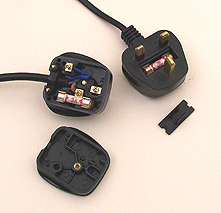
A 13 amp plug will usually come with a 13 amp fuse. This is the maximum amount of current an appliance can draw before the fuse blows. When the fuse blows it's a simple job to pull the old one out with a small screwdriver and replace it. (see section on voltage/continuity tester to see how you can check fuses) Some appliances however will come with identical plugs which have a lower rated fuse. 3 amps or 5 amps for instance. It is VERY IMPORTANT that you replace like with like. Do not use a 13 amp fuse in a appliance that stipulates a 5 amp fuse, for instance. |
 |
||||||||
| Above, two types of plugs showing the fuses. For some types you need to unscrew the back cover. For some types a smaller cover pulls out(use a small flat screwdriver) |
|||||||||
|
|
|||||||||
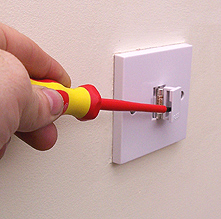
A fused spur to an individual appliance may form part of you household wiring.(they may also have a switch)These wall mounted fittings have a fuse inside which may need replacing. Replace the fuse with the same rated fuse.
|
 |
||||||||
| Above, opening the fuse holder in a fused spur | |||||||||
| Tip Test fuses with a continuity tester. | |||||||||